Frame color is not a finishing detail. It changes the entire reading of a pair of glasses.
Black draws a line around the face. Tortoise introduces movement and depth. Clear allows light and the colors around it to take a larger role. Put those three treatments on the same silhouette and they become three different objects.
The best choice is rarely the color that looks most interesting by itself. It is the one that makes sense beside the clothing, textures, and objects already present in your life.
Should you begin with your wardrobe or your complexion?
Begin with your wardrobe. Skin tone and hair color can be useful considerations, but they should not become rigid rules. Eyewear is worn with clothes, jewelry, outerwear, and changing light. A frame that works with the colors you repeatedly wear will usually prove more useful than one selected from a generic complexion chart.
Look at the five pieces you wear most often. Are they black, navy, gray, and white? Are they olive, brown, cream, and denim? Do you rely on one strong color, or do you prefer tonal combinations?
Your answer reveals the role your glasses can play. They can reinforce the wardrobe, create contrast, or sit between several color families.
What does a matte black frame add?
Black is the clearest outline. It defines the shape of the frame and gives the upper face structure. A matte treatment makes that definition feel controlled rather than decorative.
Matte Black is the most direct of the three ATÉN colorways. It belongs naturally with black tailoring, white shirts, dark denim, leather, technical outerwear, and restrained sportswear. Against lighter clothing, it becomes the anchor. Within a dark look, it extends the line of the outfit.
Black is also useful when a wardrobe contains many unrelated colors. Rather than attempting to match each one, the frame acts like punctuation. It creates a stable element from one day to the next.
Choose black when you want the silhouette to be seen first.
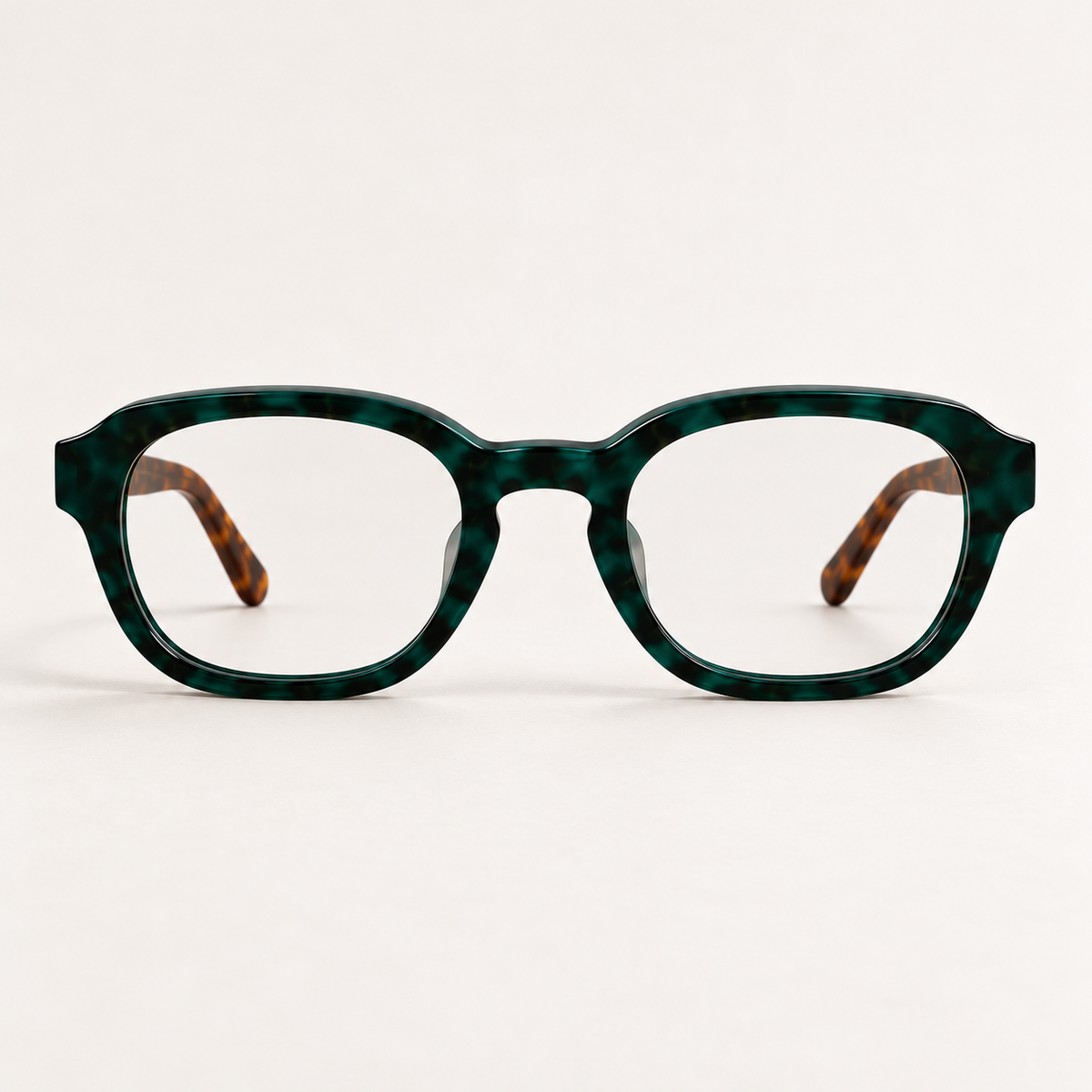
Why does green tortoise feel different from traditional tortoise?
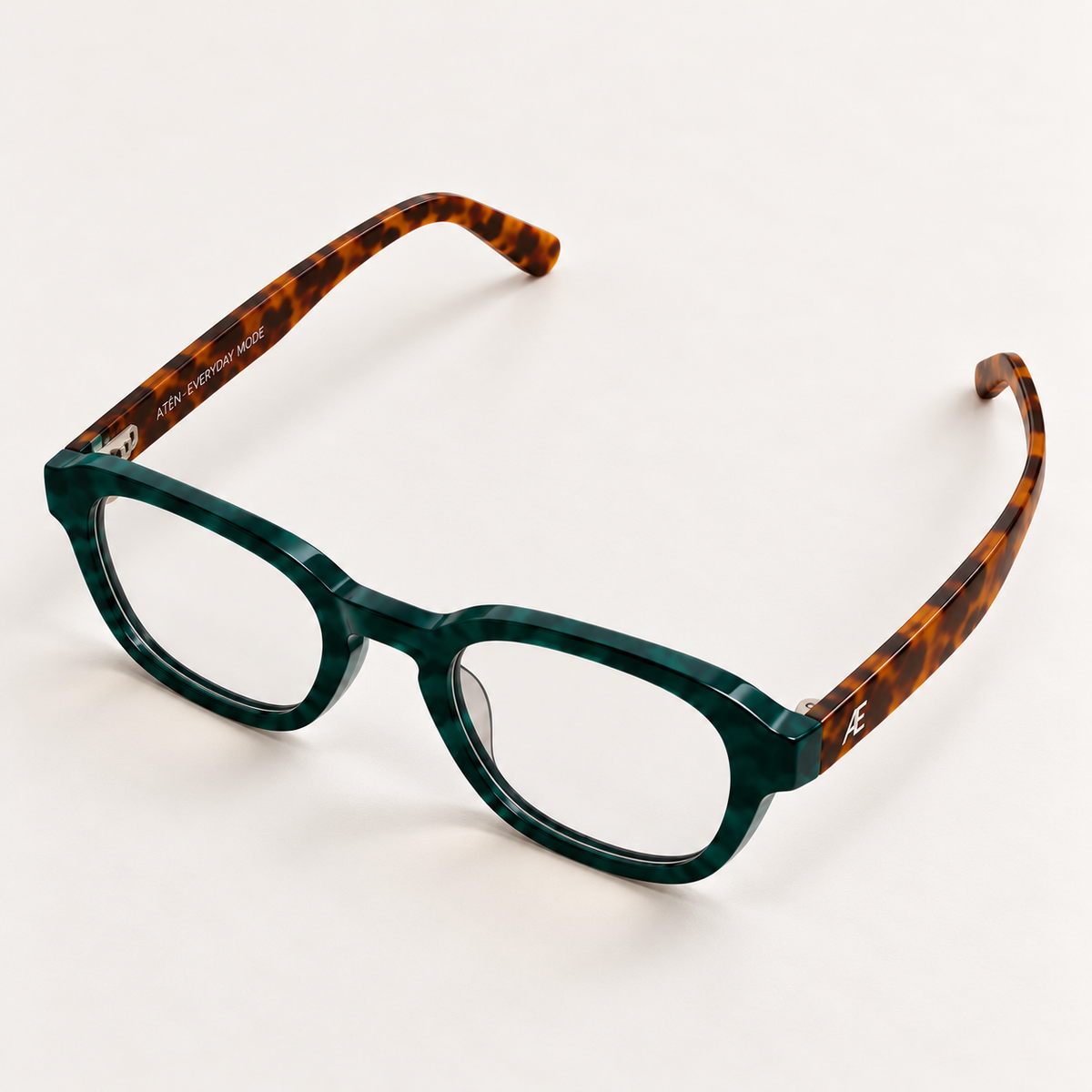
Tortoise works because it is not one flat color. Its variation softens a frame’s outline and gives the surface visual depth. Traditional brown tortoise often leans warm and familiar. Green introduces another register: natural, slightly unexpected, and easier to place beside both earth tones and colder neutrals.
Forest/Tortoise can sit comfortably with olive, navy, cream, charcoal, brown, washed denim, and muted burgundy. It can also provide the only pattern in an otherwise plain outfit.
Industry color reporting supports the continued relevance of this family. The official MIDO 2025 trend overview highlighted black, Havana, amber, red, blue, and green, while its 2026 report continued into crystal, deep brown, honey, khaki, and green.
Choose green tortoise when you want character without relying on a loud, solid color.
When is a clear frame the strongest choice?
Clear frames are often described as neutral, but they are more responsive than neutral. They pick up the light, skin, hair, and clothing around them. The result changes from one setting to another.
Crystal Clear works especially well when the wardrobe already carries strong information: a patterned shirt, a saturated knit, a sharply tailored jacket, or an all-black look. The frame remains visible through its shape while avoiding another heavy color block.
Transparency is also a current design direction rather than a passing absence of color. MIDO’s 2026 “Water Lights” theme focused on transparent materials, layered effects, and the relationship between light, volume, and the face.
Clear can feel minimal beside white and cream, more graphic beside black, and almost reflective around jewelry or metallic details. Choose it when you want the silhouette without the visual weight of a dark outline.
Should frame color follow fashion’s color forecasts?
Forecasts are useful for context, not instruction. Pinterest’s 2026 color palette includes Jade, Wasabi, Persimmon, Plum Noir, and Cool Blue. The range moves from quiet mineral shades to deliberately forceful color.
That breadth is more important than any individual hue. It suggests that personal color is replacing the idea of one universally correct neutral. A green frame can now function as an everyday choice. Black can be severe rather than merely safe. Clear can be expressive through light and proportion.
A seasonal color can help you see an existing wardrobe differently, but a frame should survive after the season’s name has disappeared.
How can you decide between the three at home?
Use a three-outfit test. Choose the outfit you wear most often, the most formal outfit you regularly need, and the most expressive thing in your wardrobe. Consider each frame against all three.
If black gives every look useful structure, choose Matte Black. If you want a frame that adds pattern and an uncommon natural color, choose Forest/Tortoise. If your clothing already does most of the talking—or you prefer a lighter visual effect—choose Crystal Clear.
Do not choose according to gendered categories or a rule about what you are supposed to wear. Choose the relationship you want between the frame and everything around it.
Black defines. Green tortoise adds depth. Clear makes room. The right color is the one that continues to feel intentional after the rest of the outfit changes.
For the design philosophy behind the frame, read Can Blue Light Glasses Look Like Real Eyewear? Then explore every colour in the ATÉN collection.

Leave a comment
All comments are moderated before being published.
This site is protected by hCaptcha and the hCaptcha Privacy Policy and Terms of Service apply.