ATÉN uses three lens modes because a subtle warm tint, a pronounced amber tint and a deep red tint do not create the same visual environment. The right choice depends on the time of day, the work in front of you and how much colour shift you can accept.
Everyday Mode: subtle warm tint
Everyday Mode has a subtle warm tint, the brightest view and the least colour shift of the three tested samples. It is intended for morning through late afternoon, including client calls, shared workspaces, travel and mixed screen-to-room work.
Choose it when the least colour shift and a discreet appearance matter most. Verify colour-critical decisions without any filter. It has the lowest calculated attenuation of the three ATÉN samples.
Focus Mode: pronounced amber tint
Focus Mode has a pronounced amber tint and noticeable colour shift. It has 71.74% calculated blue-light attenuation and is intended for afternoon into early evening when precise colour is not essential.
“Focus Mode” is the name of the lens, not a promise that it improves concentration. Designers, photographers and editors should switch to Everyday Mode or remove the glasses for colour-critical decisions.
After Hours: deep red tint
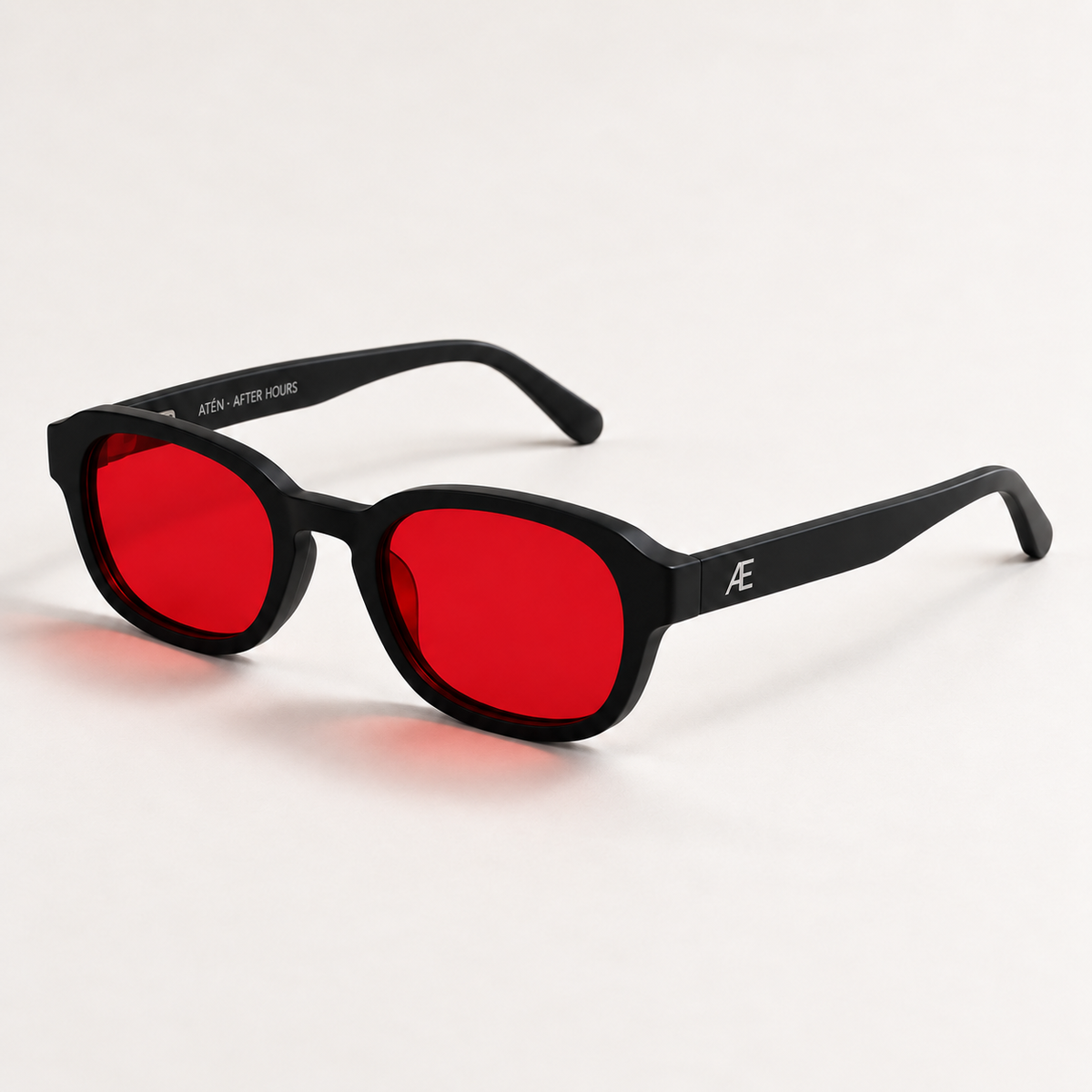
After Hours has a deep red tint, the darkest view and the strongest colour shift. It has 99.91% calculated blue-light attenuation and is intended for late-evening screens, reading and familiar indoor routines during the final 2–3 hours before your usual bedtime.
The deep red tint materially changes brightness and colour perception. Finish colour-sensitive work first, and do not use After Hours for driving.
One frame, three contexts
No single tint is ideal for every hour. Compare the tested optical profiles and recommended timing in the ATÉN lens guide, then choose a frame colour and lens pairing in the ATÉN collection.


Leave a comment
All comments are moderated before being published.
This site is protected by hCaptcha and the hCaptcha Privacy Policy and Terms of Service apply.