Modern work no longer happens under one kind of light. A day can move from window daylight to office LEDs, several displays, a commute and an evening at home without a clear visual boundary between work and rest.
Spectrum is only one part of light
Screen and LED sources contain short-wavelength visible light, but wavelength alone does not explain an environment. Brightness, timing, duration, distance and the surrounding room all affect the signal reaching the eye.
This is why “blue light” should not be treated as a single threat. Daylight contains blue wavelengths and supports daytime circadian signaling. At night, bright light with higher melanopic content can delay the transition toward darkness. Context changes the question.
Work habits still matter most for comfort
For digital eye strain, the strongest practical factors include blink rate, viewing distance, glare, screen contrast and posture. A lens tint cannot correct a dry room, a monitor placed too high or hours without a distance-viewing break. Read our guide to digital eye strain for a practical setup.
ATÉN’s three measured lens modes
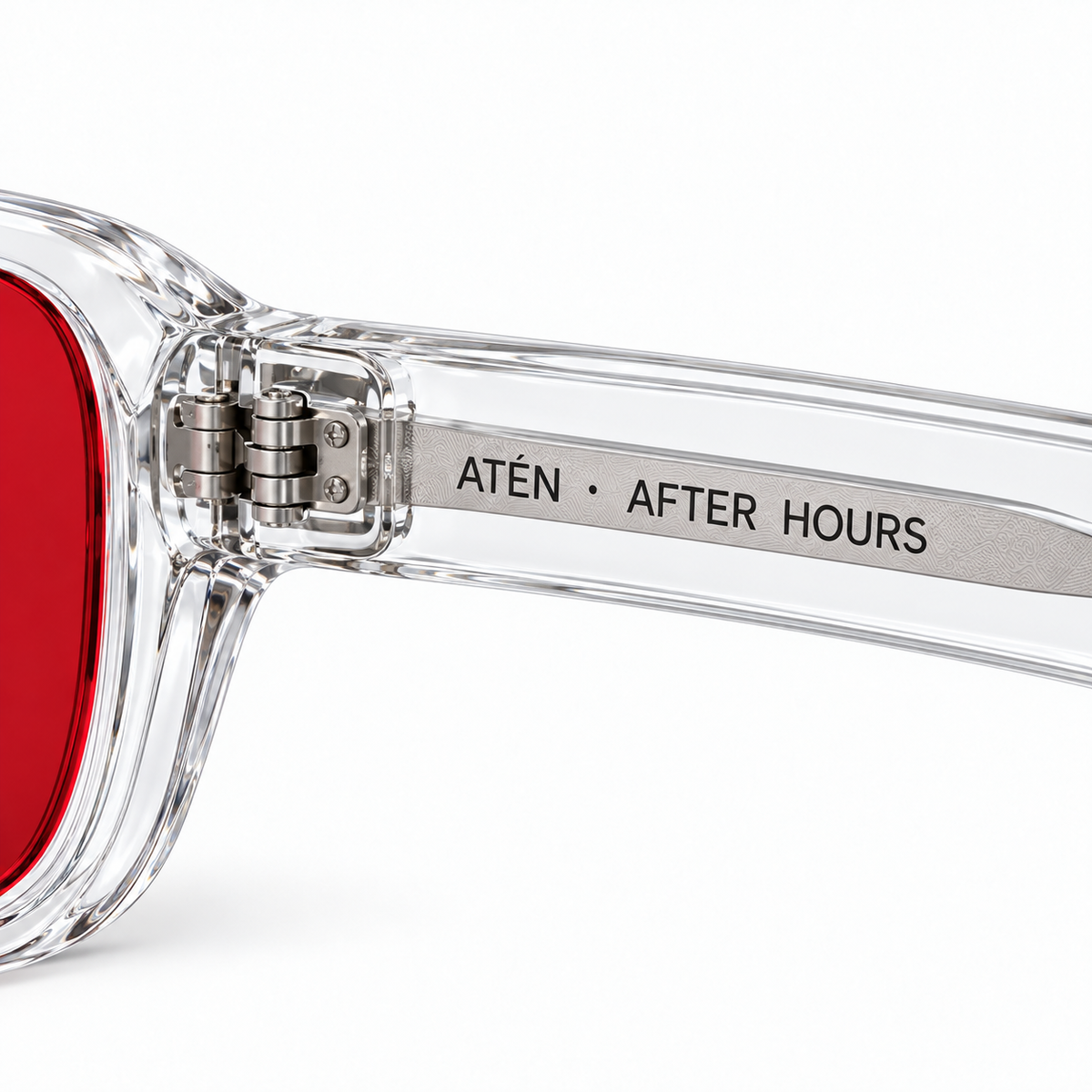
Using supplier-reported lens-centre transmission measured at 10 nm intervals from 280–780 nm, ATÉN calculates blue-light attenuation of 43.03% for Everyday Mode, 71.74% for Focus Mode and 99.91% for After Hours. The Lens Guide shows the calculations across 380–500 nm under ISO/ANSI and 400–500 nm under AS/NZS. These are optical measurements, not promises about focus, comfort, eye health or sleep.
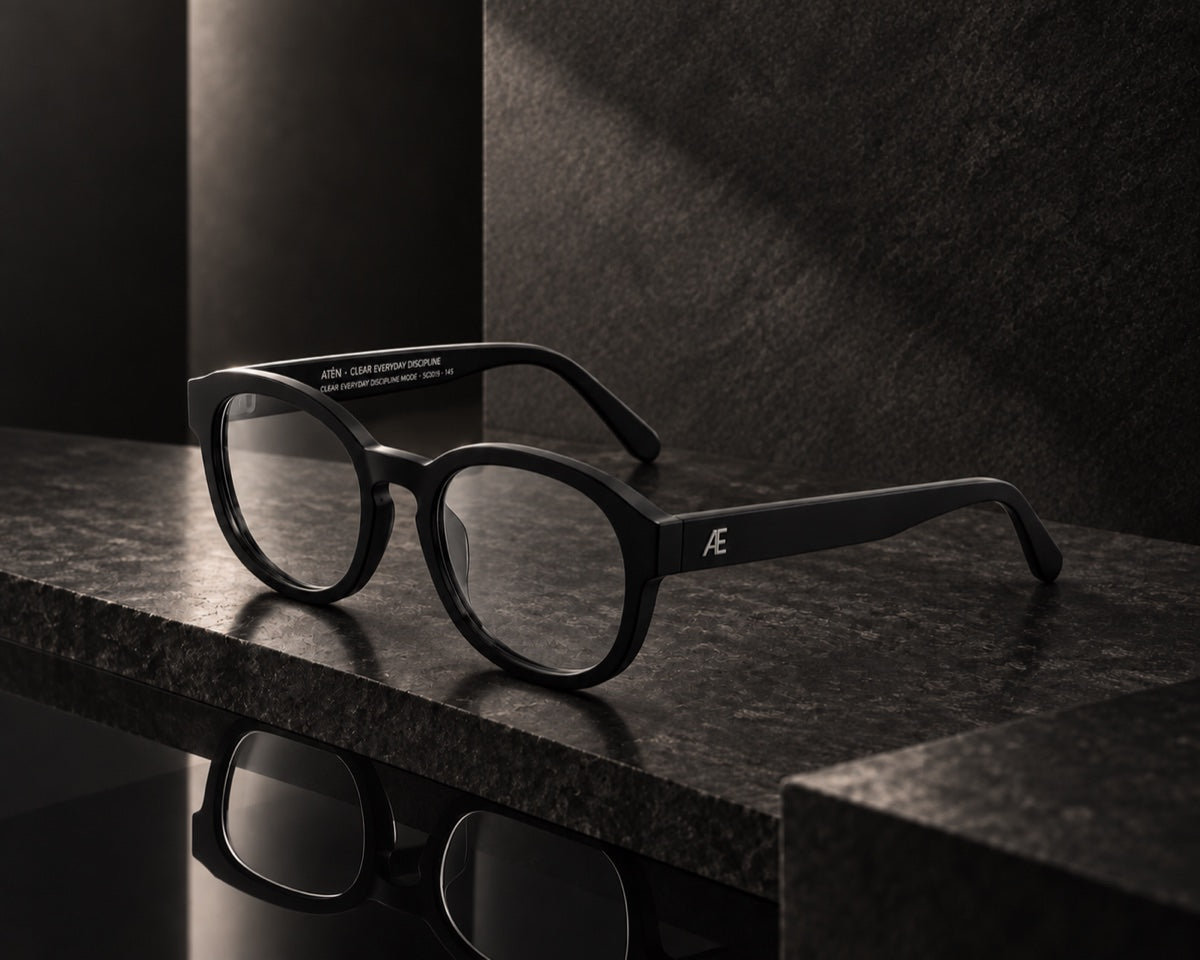
Each tint creates a different balance between filtration and colour shift. The ATÉN lens guide explains the measurements, intended timing and visual tradeoffs. Explore every lens in Matte Black, Crystal Clear and Forest/Tortoise in the ATÉN collection.

Leave a comment
All comments are moderated before being published.
This site is protected by hCaptcha and the hCaptcha Privacy Policy and Terms of Service apply.