
Last reviewed October 2026.
Blue-light eyewear is often sold through certainty: stronger percentages, dramatic diagrams, and broad promises about how a person will feel.
ATÉN takes a narrower position. We will describe what a lens is designed to do, identify the source of its specifications, and stop where the evidence stops.
Why does an eyewear brand need a claims standard?
Because a technical statement and a health claim are not the same thing.
A lens can be tested for light transmission across a defined wavelength range. That test may support a statement about the lens. It does not automatically establish that wearing the finished glasses will improve focus, relieve eye strain, protect the retina, or change sleep.
Those outcomes involve a person, a use pattern, an environment, and many variables beyond the material in front of the eyes. Moving from a laboratory measurement to a promised human result requires evidence designed for that exact question.
Without a standard, qualifiers disappear as copy moves from a technical page to an advertisement, an affiliate post, or a social caption. “Measured at one wavelength” becomes “blocks blue light.” “Designed for evening use” becomes “improves sleep.” Repetition makes the statement familiar, not proven.
What does the evidence currently say?
The evidence is more limited than much of the category’s marketing suggests.
The American Academy of Ophthalmology says current scientific evidence does not show that light from computer screens damages the eyes, and it does not recommend special eyewear for computer use on that basis.
A 2023 Cochrane systematic review found that blue-light filtering lenses may not reduce short-term digital eye-strain symptoms compared with lenses that do not filter blue light. The evidence concerning sleep quality was uncertain.
A randomized controlled trial similarly found no meaningful difference between blue-blocking and clear lenses for eye-strain symptoms after a computer task. That result does not answer every possible question about every tint or use pattern. It does show why broad relief claims should not be treated as settled fact.
Light and darkness are genuine inputs to human circadian timing, as the National Institute of General Medical Sciences explains. Small studies, including an amber-lens trial involving people with insomnia, have explored whether evening light filtering may affect sleep-related outcomes. A small study in a defined population is not proof that any tinted lens will improve sleep for every wearer.
Scientific restraint does not require pretending light is irrelevant. It requires keeping each conclusion proportional to the study that supports it.
How will ATÉN describe lens performance?
Every published transmission or filtering figure should answer more than “how much?” It should identify what was measured and who measured it.
- The lens: the specific lens mode associated with the figure.
- The range: the wavelength or wavelength band to which the percentage applies.
- The method: enough context to distinguish a spectral measurement from a general marketing estimate.
- The source: supplier-reported data or independent testing.
- The version: the applicable test or report date when that information is available.
Current ATÉN specifications are calculated from supplier-reported lens-centre transmission measured at 10 nm intervals from 280–780 nm. We label the source as supplier-reported and do not describe it as independent laboratory verification. The Lens Guide shows the standards-based calculation ranges: 380–500 nm under ISO/ANSI and 400–500 nm under AS/NZS.
The same figure should appear consistently on the product page, technical explanation, packaging, advertising, and affiliate materials. If a source changes, every affected claim should be reviewed rather than leaving different numbers in different parts of the site.
What will ATÉN say—and what will it refuse to say?
| Language ATÉN may use | Language ATÉN will not use without direct evidence |
|---|---|
| Designed for focused work | Improves focus or concentration |
| Made for long stretches at a screen | Relieves digital eye strain or eye fatigue |
| Intended for evening use; not for driving | Improves sleep or resets your circadian rhythm |
| A stated filtering figure within a stated wavelength band, with its source | Blocks harmful blue light as a broad, undefined claim |
| A subtle warm, pronounced amber or deep red lens | Protects eye health or prevents retinal disease |
| Supplier-reported lens-centre transmission | Independently verified when no independent report exists |
“Designed for” describes intent. “Proven to” describes evidence. ATÉN will not treat those phrases as interchangeable.
Why avoid “100%,” “best,” and “clinically proven”?
Because each phrase can imply more than the underlying information establishes.
A percentage without a wavelength range is incomplete. A lens may have one transmission value at a specific point and a different value elsewhere in the visible spectrum. Turning a narrow measurement into “100% blue-light blocking” removes the boundary that gives the number meaning.
“Best” is a comparative claim. It requires a defined comparison, a relevant method, and current evidence covering the market being compared. Personal preference is not enough.
“Clinically proven” should not be shorthand for a material specification, a supplier document, or a study of a different product. It suggests that the finished product has been tested for the stated human outcome under an appropriate protocol. ATÉN has not established that basis for claims about focus, sleep, eye strain, or eye health and will not imply otherwise.
Are customer testimonials evidence?
A customer can accurately describe an experience. That experience may be useful to another customer. It is still not a controlled test.
Testimonials do not establish that the product caused the outcome, that another person will experience the same result, or that the result is typical. Selecting several positive stories does not convert them into scientific substantiation.
The US Federal Trade Commission’s health-products guidance makes the underlying principle clear: objective health-related advertising claims require appropriate substantiation. An advertiser cannot use an endorsement to make a claim it could not make directly.
ATÉN may publish reviews as individual accounts. We will not present them as proof of a medical, sleep, or performance outcome.
What rules apply to affiliates and creators?
The same claims floor applies wherever the product is discussed.
An affiliate, creator, or paid partner should not add health promises that ATÉN has declined to make. A personal observation should be identified as personal, not rewritten as a guaranteed product effect. Technical figures should retain their wavelength range and source.
Material relationships must also be clear. Both the FTC’s influencer disclosure guidance and the Competition Bureau of Canada require meaningful disclosure when a creator has a connection to the brand.
A discount code in a caption is not a substitute for a clear disclosure. Neither is a brand tag that leaves the commercial relationship ambiguous.
What happens when evidence changes?
The claim should change with it.
New testing may refine a lens specification. Better research may strengthen, narrow, or challenge an earlier interpretation. A responsible standard cannot apply only when the result is commercially convenient.
ATÉN will correct material errors, update affected pages, and distinguish new evidence from earlier information. An old claim should not remain in circulation simply because it has already been printed or indexed.
Consistency does not mean refusing to revise. It means applying the same evidentiary threshold every time.
Does restraint make the product story smaller?
No. It makes the story more durable.
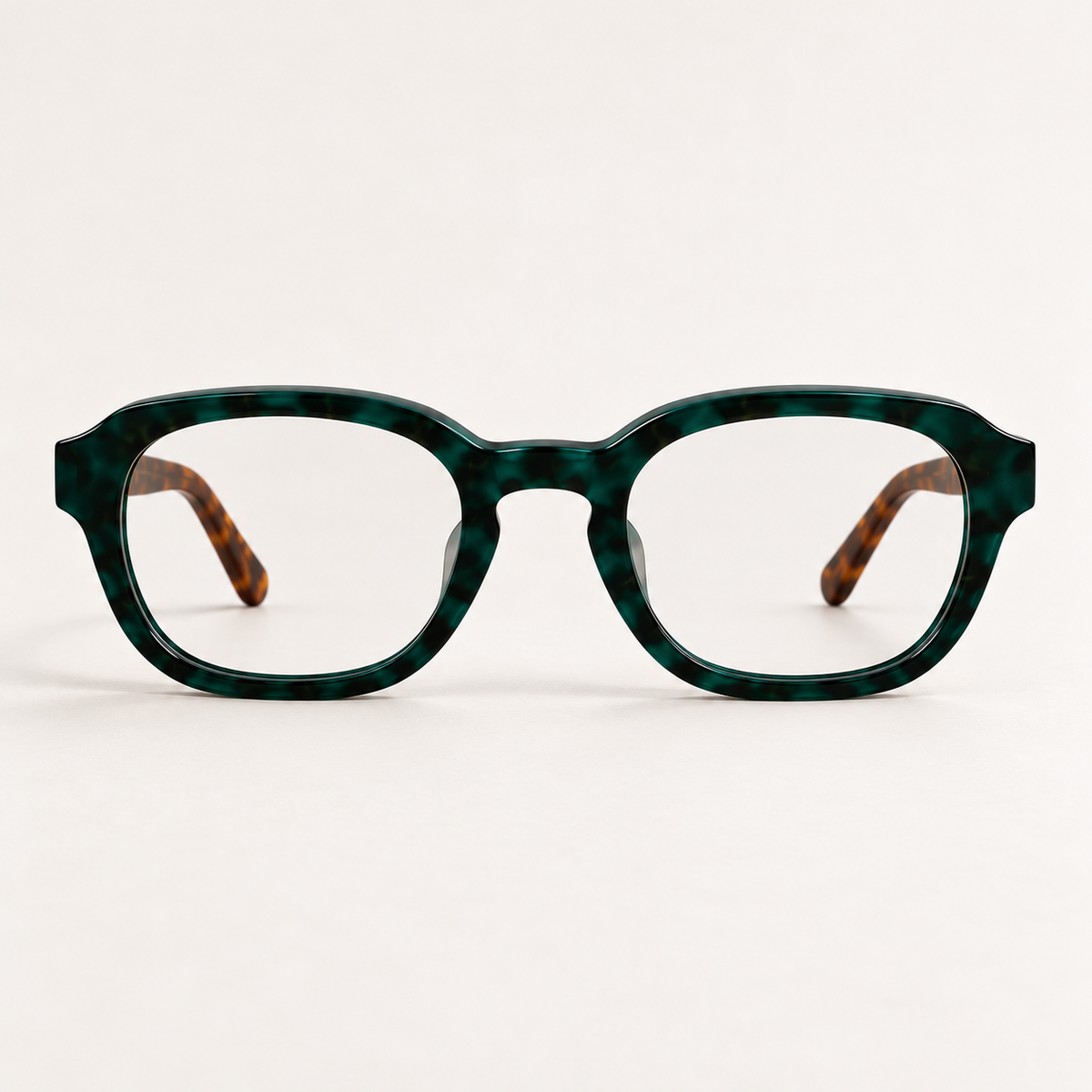
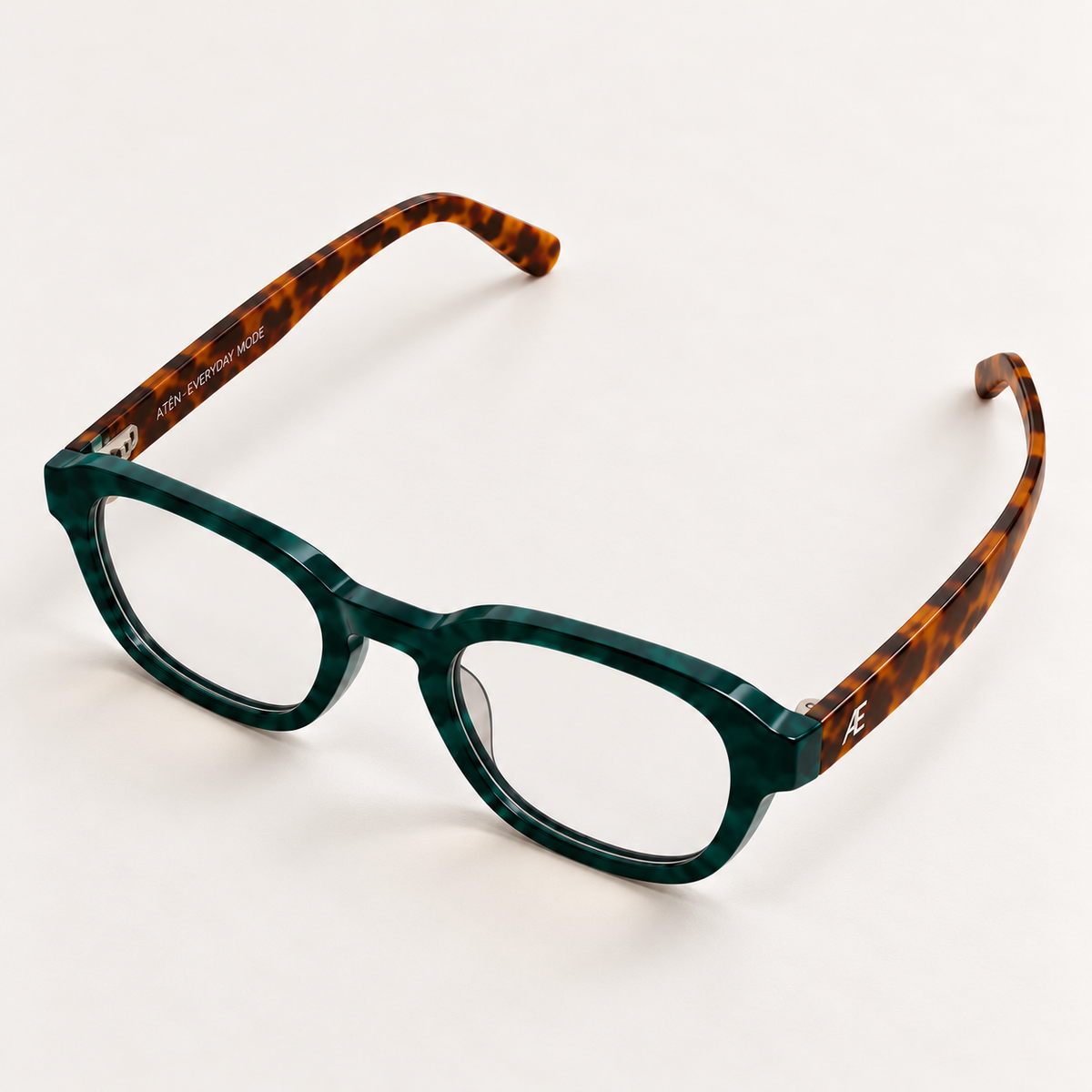
ATÉN can speak clearly about silhouette, colour, tint, intended context and measured lens properties. The ATÉN collection uses three lens modes; the lens guide explains how each changes the appearance and intended context of the same frame.
None of that requires a promise that the frame will transform the person wearing it.
The standard is simple: describe the object precisely, describe the evidence honestly, and leave the outcome claims we cannot support outside the frame.
What should a reader do with this information?
Use it to ask better questions. Which lens was tested? Across what wavelengths? Who produced the data? Is the statement about the material, or about a health outcome? Does the evidence concern the finished product being sold?
This article is educational, not medical advice. Persistent eye discomfort, vision changes, or sleep concerns belong in a conversation with an appropriately qualified healthcare professional.

Leave a comment
All comments are moderated before being published.
This site is protected by hCaptcha and the hCaptcha Privacy Policy and Terms of Service apply.