A screen-heavy workday can include meetings, research, writing, editing and hours under overhead LEDs. The right lens depends less on a promise of “performance” than on the visual task in front of you.
What Focus Mode is
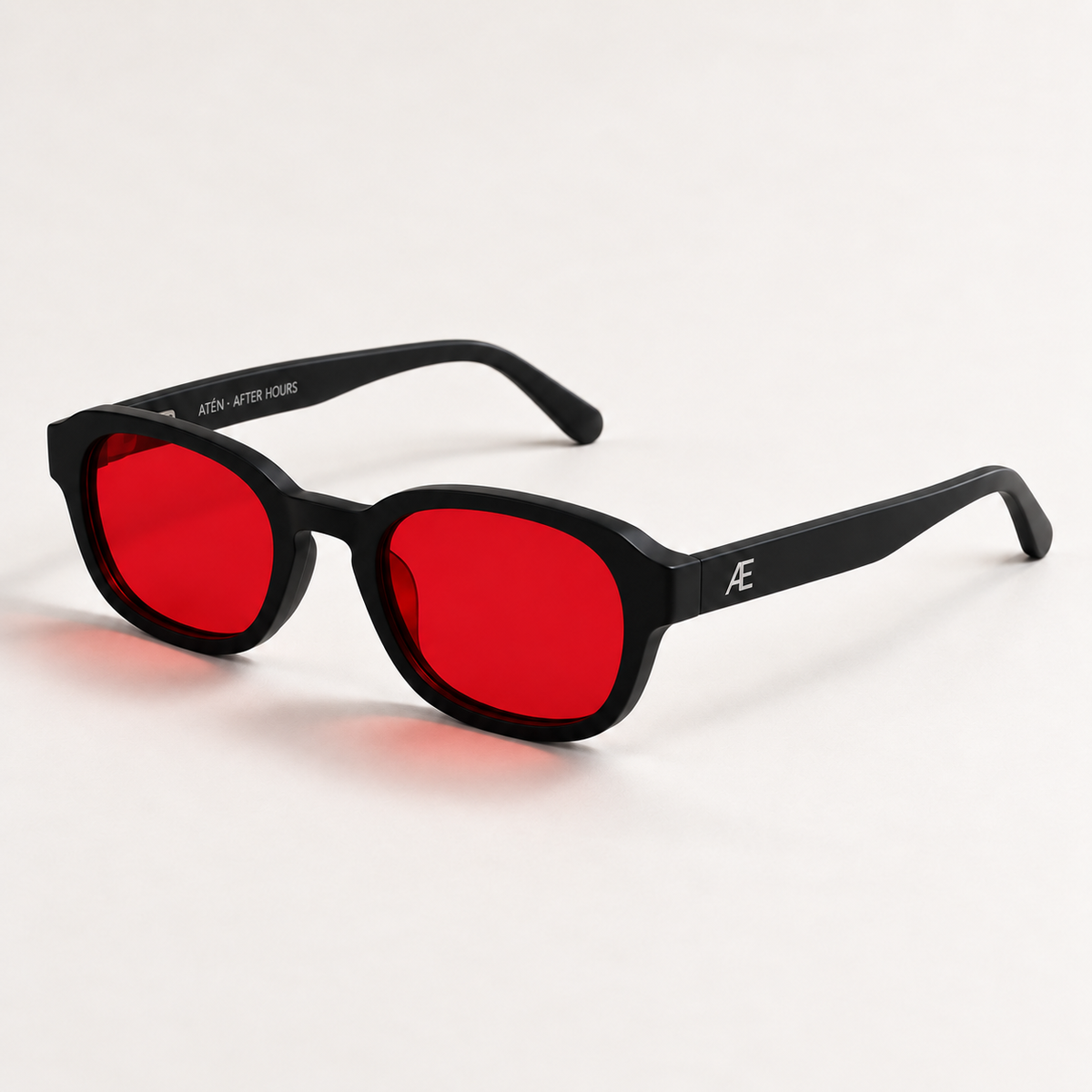
Focus Mode is ATÉN’s pronounced amber lens. Using supplier-reported lens-centre transmission measured at 10 nm intervals from 280–780 nm, ATÉN calculates 71.74% blue-light attenuation. The Lens Guide shows the calculation across 380–500 nm under ISO/ANSI and 400–500 nm under AS/NZS. This is an optical measurement, not a promise about focus or performance.
The name describes its intended context. It is not a promise that the lens improves concentration, eliminates fatigue or treats digital eye strain.
When the pronounced amber tint fits
Focus Mode is best suited to afternoon or early-evening screen work when precise colour is not essential: writing, coding, administration, research and long reading sessions. The warm tint can feel out of place in a client meeting, and it is the wrong tool for colour grading, retouching or brand-colour decisions.
When to choose Everyday Mode instead
Choose Everyday Mode for morning through late afternoon, video calls and shared workspaces. Its subtle warm tint provides the brightest view and least colour shift of the three tested samples. Verify colour-critical decisions without any filter.
Fit the lens to the task
A pronounced amber lens should not be worn simply because more filtration sounds better. Choose it when you accept the tradeoff: stronger attenuation in exchange for visible warmth. Compare the three measured profiles in the ATÉN lens guide, then explore Focus Mode in every frame colour in the ATÉN collection.


Leave a comment
All comments are moderated before being published.
This site is protected by hCaptcha and the hCaptcha Privacy Policy and Terms of Service apply.