
Last reviewed October 2026.
Two frames can look similar in a photograph and feel completely different in the hand. Material, construction, hinge hardware, polishing and proportion all contribute.
Here is what the words on a product page actually mean.
What is acetate?
Cellulose acetate is a thermoplastic whose cellulose component is typically derived from cotton or wood pulp. The finished material also includes plasticizers, dyes and other additives, so “plant-derived” does not mean the complete frame is plant-only.
Designers value acetate for the depth and variety possible in coloured and patterned sheet material. Construction, dyes, plasticizers and individual sensitivities still matter.
What is the difference between block acetate and injection moulding?
This is the distinction that actually separates frames, and almost nobody explains it.
Injection moulding introduces heated material into a mould. It is efficient and repeatable; the resulting quality depends on the material, tooling and finishing.
Sheet-cut acetate starts as sheet material. Frame components are cut and shaped, then tumbled or polished and assembled. The exact sequence and finishing process varies by factory.
Sheet-cut construction generally involves more separate shaping and finishing steps than moulding, but process alone does not determine comfort, durability or quality.
How can I tell which one I am holding?
Four tells, none of which require expertise:
- Weight. Weight alone is not proof of material or process; frame thickness, hinge hardware and geometry all affect how a pair feels.
- Depth of colour. Laminated sheet patterns can show visible depth, but appearance alone does not prove the manufacturing process.
- The edge. A visible seam line can indicate moulding, but careful finishing may conceal it. Documented construction is more reliable than touch alone.
- Surface and finish. Surface feel can differ, but temperature is not a reliable material test on its own. Look instead for clean polishing, consistent edges and documented construction.
What does a named acetate supplier prove?
A supplier name identifies where sheet material came from; it does not by itself establish how a frame was cut, assembled or finished. ATÉN does not name its acetate supplier publicly without current sourcing documentation.
Is acetate better than metal or titanium?
Different, not better.
Titanium is lighter and effectively immune to corrosion, which is why it dominates minimal rimless designs. But it cannot hold colour the way acetate does, and thin metal has a narrower range of shapes available to it.
Acetate can be thick without looking crude, holds complex colour, and warms to the face. It is the material you choose when the frame is meant to be visible — when the shape is part of the point.
How should I look after it?
- Never leave it on a dashboard. Heat is acetate's real enemy — sustained heat will warp a frame permanently.
- Clean with water and a microfibre cloth. Alcohol wipes and household cleaners dull the polish over time.
- Two hands. Removing glasses one-handed racks the frame slightly every single time, and after a year it shows.
- Acetate can be re-polished. Unlike coated plastics, a dull frame can be brought back by an optician. It is a material that can be maintained rather than replaced.
The short version
Ask two questions of any frame: what is it made of, and how was it made. Most brands answer the first and stay quiet about the second, because the second is where the cost lives.
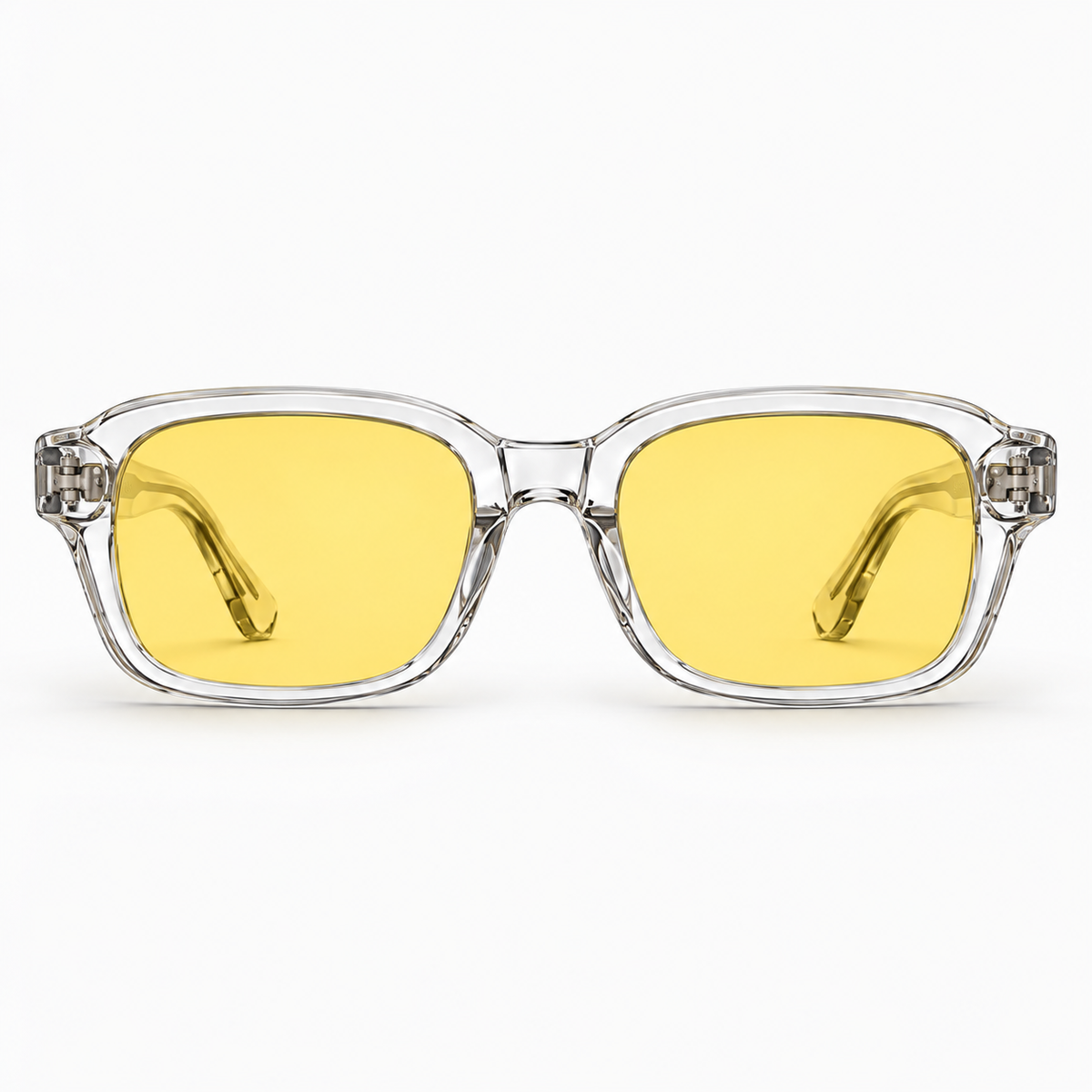
ATÉN is a Toronto eyewear studio. One silhouette in Italian cellulose acetate — three colourways, three lens modes. Compare ATÉN’s three tints in the lens guide, or explore every acetate frame colour in the ATÉN collection.


Leave a comment
All comments are moderated before being published.
This site is protected by hCaptcha and the hCaptcha Privacy Policy and Terms of Service apply.