Last reviewed October 2026.
A lens tint is not decorative. It determines how the visible spectrum reaches the eye, how the room appears and when the lens is practical to wear.
Here is how ATÉN’s subtle warm, pronounced amber and deep red lenses differ—and the visual tradeoffs each tint introduces.
What is Everyday Mode?
Everyday Mode has 43.03% calculated blue-light attenuation.
Everyday Mode has a subtle warm tint, the brightest view and the least colour shift of the three tested samples. Colour-critical work should still be checked without a filter.
Intended timing: morning through late afternoon, including meetings, travel and mixed screen-to-room work.
The honest caveat: Everyday Mode has the lowest calculated attenuation of the three ATÉN samples. Its optical measurement does not establish relief from eye strain; read what the current evidence does and does not support.
What is Focus Mode?
Focus Mode has 71.74% calculated blue-light attenuation.
Focus Mode has a pronounced amber tint and noticeable colour shift. Whites appear warmer and blues are visibly altered.
Intended timing: afternoon into early evening for writing, coding, analysis and other non-colour-critical work.
The honest caveat: the pronounced amber tint is not appropriate for colour-critical work. Remove the glasses before grading video, retouching photographs or approving brand colours.
What is After Hours?
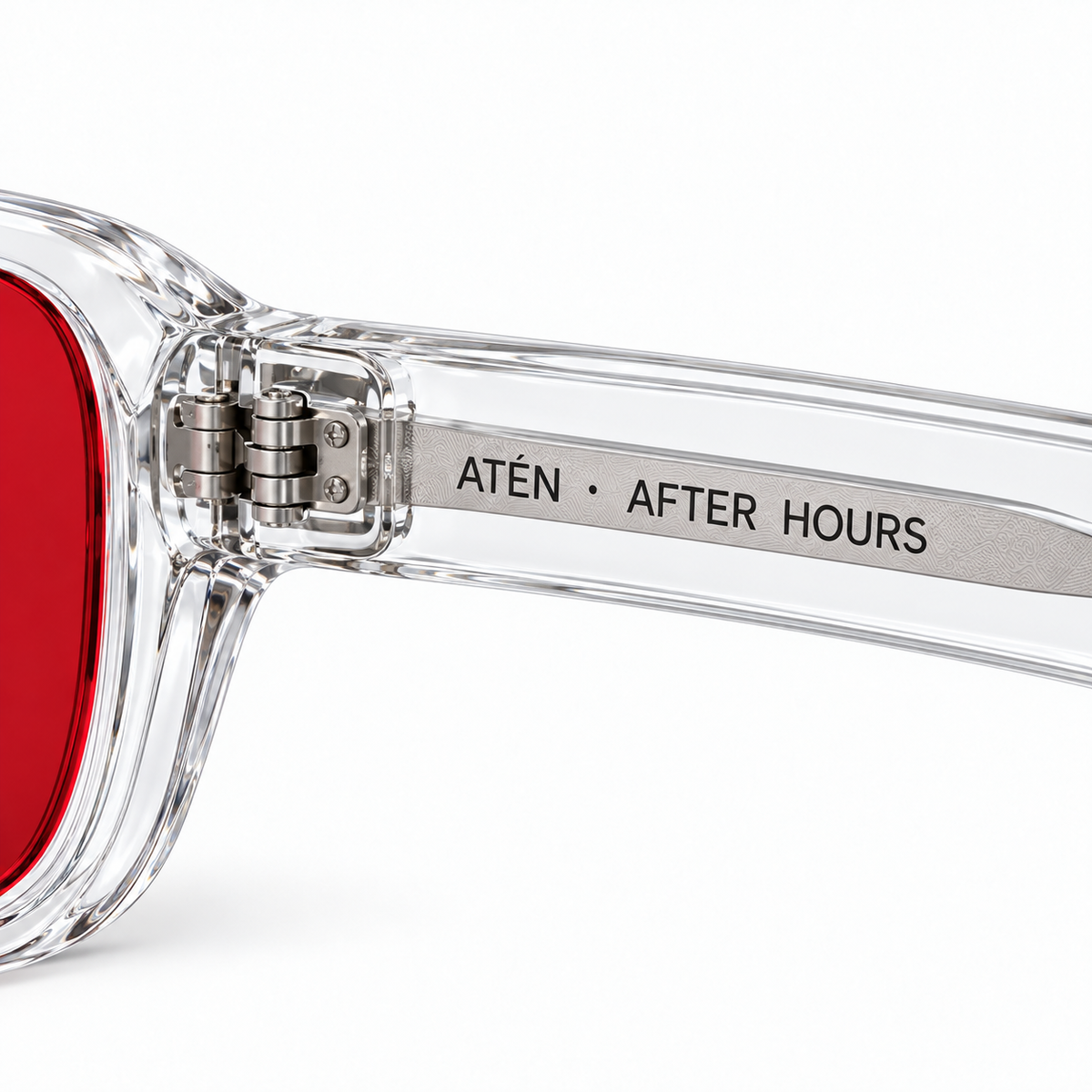
After Hours has 99.91% calculated blue-light attenuation.
After Hours has a deep red tint, the darkest view and the strongest colour shift of the three tested samples. Its percentage is calculated across the same standards-based ranges used for the other modes: 380–500 nm under ISO/ANSI and 400–500 nm under AS/NZS.
Intended timing: the final 2–3 hours before your usual bedtime, including late-evening screens, reading and familiar indoor routines.
The honest caveat: not suitable for driving. The deep red tint materially changes brightness and colour perception and is not appropriate where accurate colour, contrast or hazard recognition is required.
What does visible tint establish?
Visible tint shows colour shift; it does not prove a sleep benefit. Current sleep evidence is mixed and low-certainty. A recent actigraphy-only meta-analysis of three small crossover trials found no statistically significant sleep benefit. The Lens Guide’s data establishes optical attenuation only, and ATÉN does not promise a sleep outcome.
A photograph can show tint but cannot quantify spectral transmission. Ask for the wavelength band, measurement method and underlying report; our lens-test guide explains how to read them.
Do I need more than one?
Not necessarily. The three modes differ in calculated attenuation, brightness, colour shift and intended timing. Choose the visual tradeoff that fits the part of your routine you actually want to address.
Everyday Mode is intended for morning through late afternoon, Focus Mode for afternoon into early evening, and After Hours for the final 2–3 hours before bedtime.
Quick reference
| Lens | Filters | Band | When | Watch out for |
|---|---|---|---|---|
| Everyday Mode | 43.03% calculated attenuation | 380–500 nm ISO/ANSI; 400–500 nm AS/NZS | Morning through late afternoon | Subtle warm tint; verify colour-critical work without a filter |
| Focus Mode | 71.74% calculated attenuation | 380–500 nm ISO/ANSI; 400–500 nm AS/NZS | Afternoon into early evening | Pronounced amber tint; not for colour-critical work |
| After Hours | 99.91% calculated attenuation | 380–500 nm ISO/ANSI; 400–500 nm AS/NZS | Final 2–3 hours before bedtime | Deep red tint; not suitable for driving |
The figures above are calculated from supplier-reported lens-centre transmission measured at 10 nm intervals from 280–780 nm. See the Lens Guide for the wavelength-by-wavelength measurements, calculation context, intended timing and visual tradeoffs. Optical data does not establish a health, sleep, focus or performance outcome.
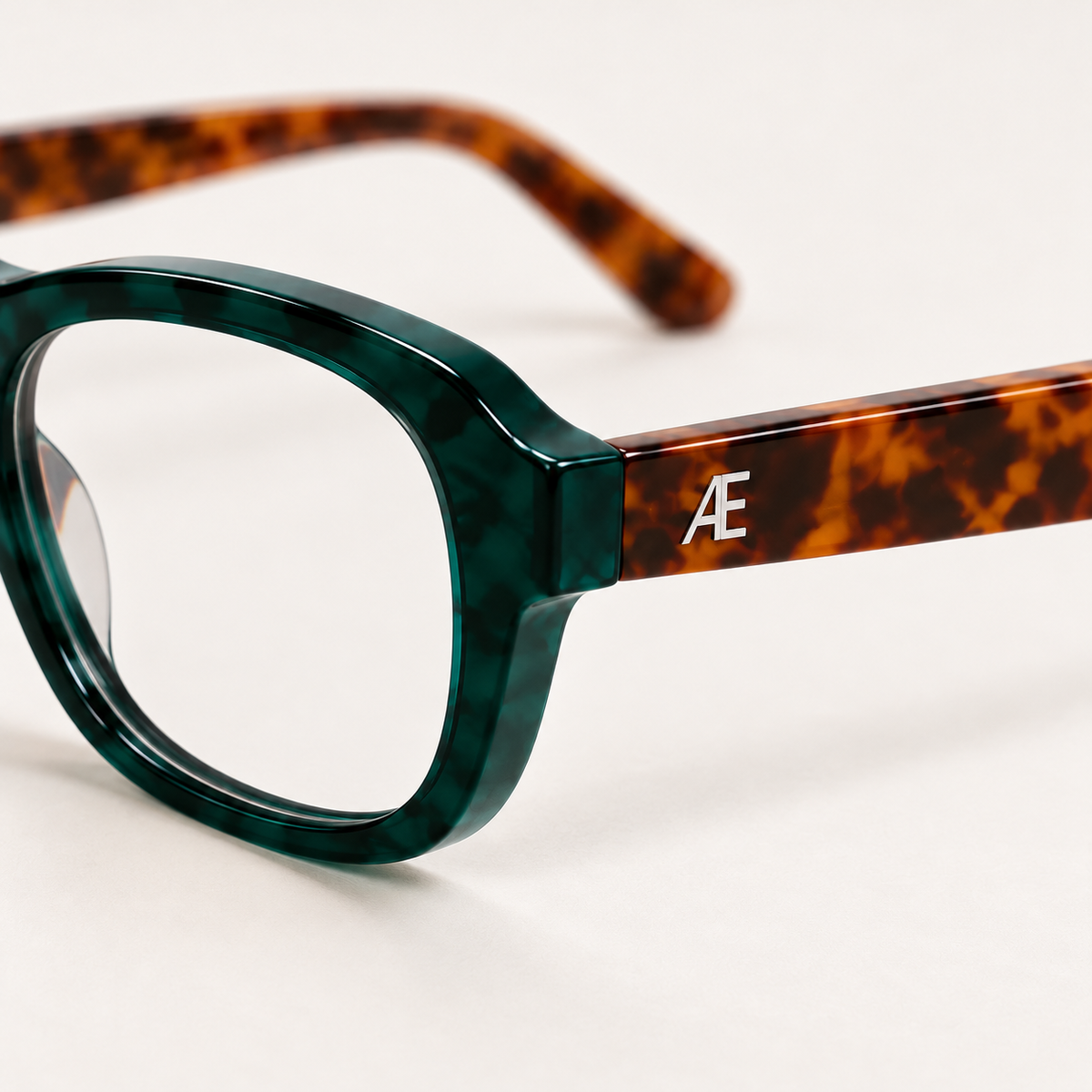
ATÉN is a Toronto eyewear studio. One acetate frame in three colourways, three lens modes. Explore all nine frame-and-lens combinations in the ATÉN collection.

Leave a comment
All comments are moderated before being published.
This site is protected by hCaptcha and the hCaptcha Privacy Policy and Terms of Service apply.